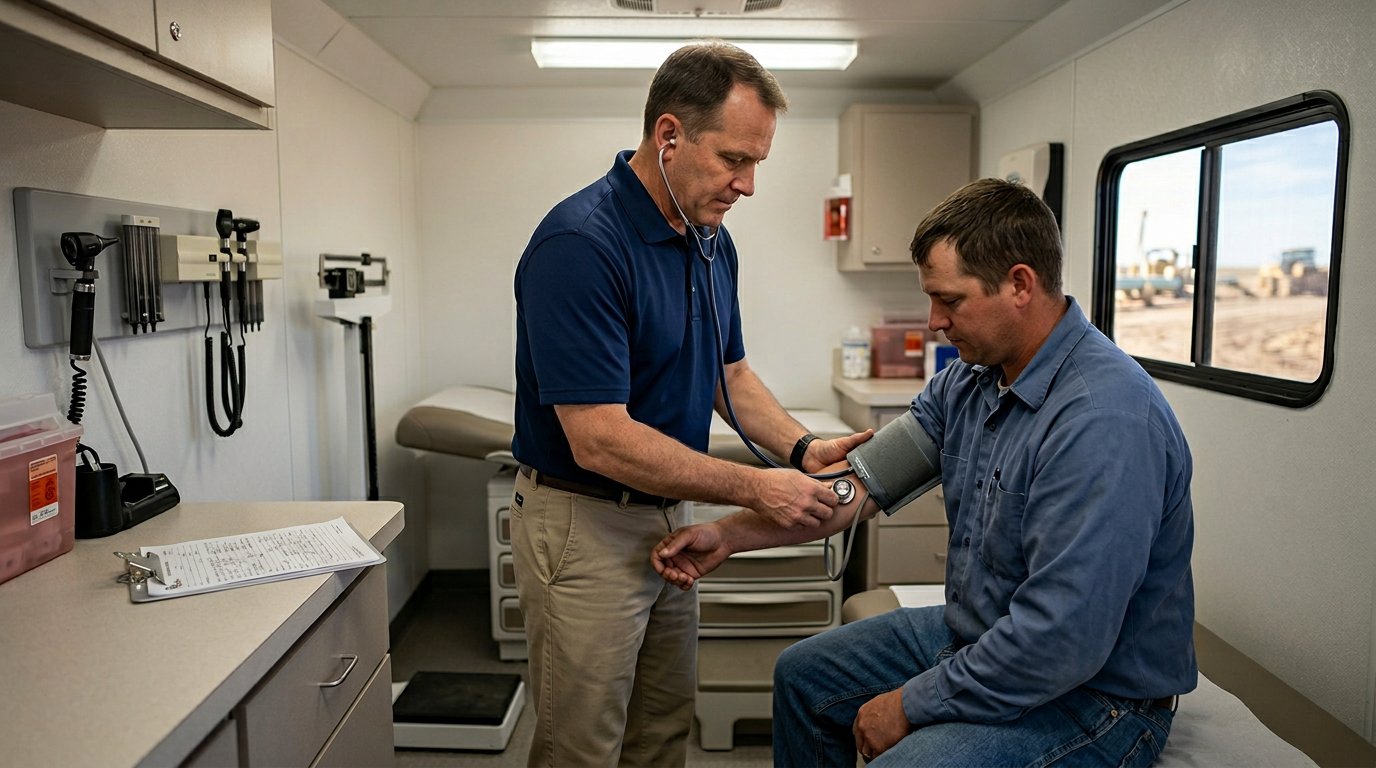
Pre-employment drug testing and DOT physical examinations are foundational compliance requirements for contractors in oil and gas, pipeline, construction, and transportation. Getting them wrong creates immediate project access problems, regulatory exposure, and potential disqualification from operator work scopes.
DOT Physical Examination Requirements
The DOT physical examination is required for all commercial motor vehicle drivers under FMCSA regulations. The certificate is valid for up to 24 months. The critical compliance point: since 2014, DOT physicals must be performed by medical examiners listed on the FMCSA National Registry of Certified Medical Examiners. A physical performed by a provider not on the NRCME registry is invalid for DOT purposes, regardless of the provider’s medical qualifications. This is the single most common DOT physical audit finding.
NRCME Medical Examiner Requirements
Contractors should verify their medical provider’s NRCME listing before scheduling any DOT physical. The FMCSA maintains a public search tool where you can confirm a provider’s current registry status. Using a non-listed provider means every driver physical performed by that provider is invalid, which can cascade into driver qualification file deficiencies across your entire fleet.
Drake Group’s clinical operations team includes NRCME-certified medical examiners who can perform DOT physicals on site at project locations, eliminating the need for drivers to travel to off-site clinics.
Pre-Employment Drug Testing Requirements
For DOT-regulated positions, pre-employment drug testing must follow 49 CFR Part 40 procedures. The DOT five-panel test screens for marijuana, cocaine, opiates, amphetamines, and phencyclidine. For PHMSA-regulated pipeline operations, testing must be completed with a verified negative result before any individual performs a covered pipeline function. The most common pre-employment testing mistake is timing. Verify the acceptable testing window for each operator before assuming a previous test result remains valid.
Audiometric Testing and Hearing Conservation
Contractors with employees exposed to noise levels at or above 85 decibels over an eight-hour time-weighted average must implement a hearing conservation program under OSHA 29 CFR 1910.95. Audiometric testing must be performed by a CAOHC-certified technician or a licensed audiologist. Drake Group’s clinical team includes CAOHC-certified technicians who can conduct audiometric testing on site.
Frequently Asked Questions
Q: Who can perform a DOT physical examination?
A: DOT physicals must be performed by a medical examiner listed on the FMCSA National Registry of Certified Medical Examiners. Physicals performed by non-NRCME providers are invalid for DOT purposes.
Q: What does a DOT drug test screen for?
A: The DOT five-panel drug test screens for marijuana, cocaine, opiates, amphetamines, and phencyclidine. Testing must follow 49 CFR Part 40 procedures using SAMHSA-certified laboratories.
Q: Can DOT physicals be done on site at project locations?
A: Yes, if the on-site medical provider holds current NRCME certification. Drake Group provides NRCME-certified examiners as part of its on-site medical staffing services.
Need on-site DOT physicals, drug testing, or audiometric services? Contact Drake Group for medical staffing capabilities.