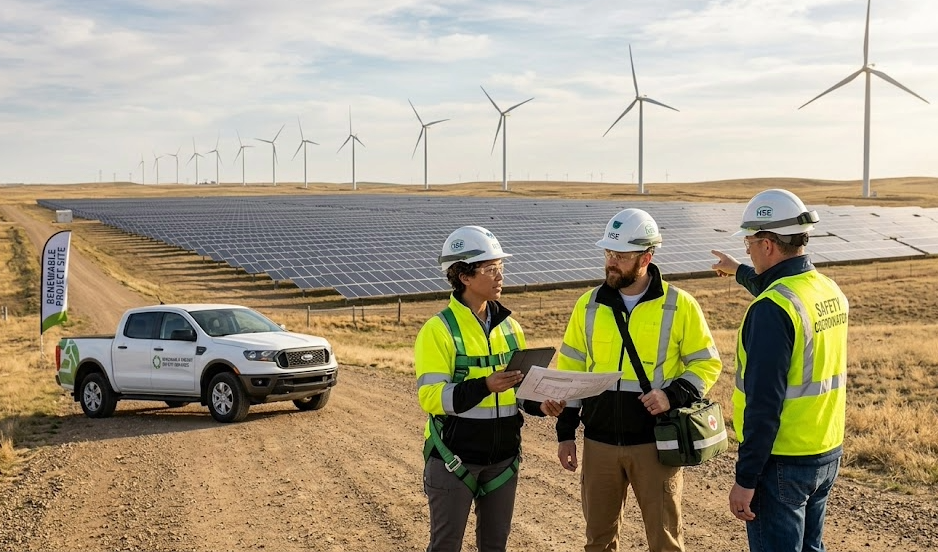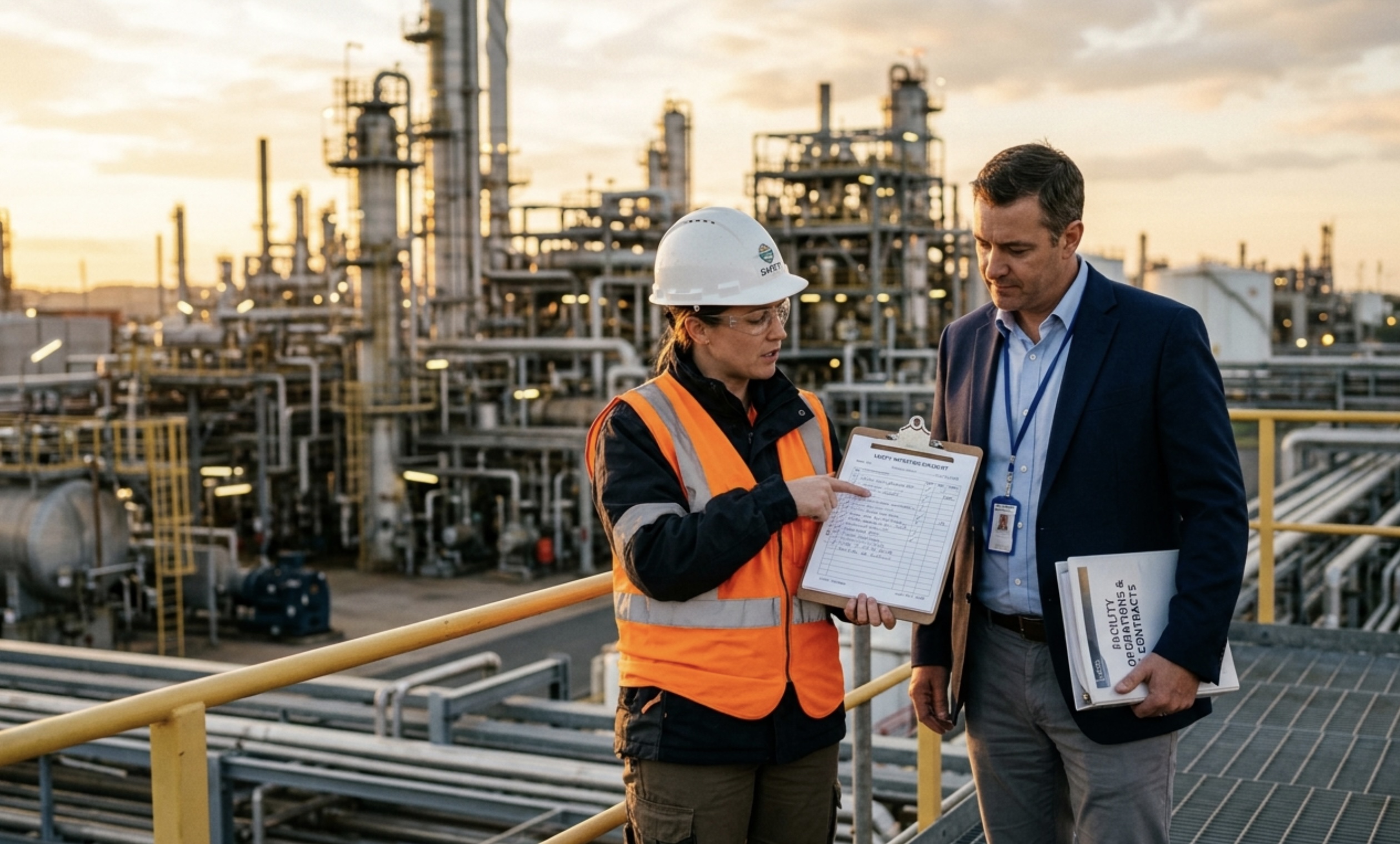
Solar farm safety staffing ensures on-site HSE and medical coverage specific to photovoltaic installation and maintenance hazards. Developers and contractors operating utility-scale or commercial rooftop solar projects need HSE coordinators trained in DC electrical systems, on-site medical personnel (NRCME-credentialed) familiar with electrical injury assessment, and heat illness protocols adaptive to construction schedules. Drake Group provides veteran-owned solar safety staffing with direct experience managing utility-scale arrays across Texas and the Southwest, delivering OSHA-compliant HSE frameworks without unnecessary safety theater.
Why Solar Farm Construction Requires Dedicated Safety Staffing
Solar farm projects operate under time and financial pressure. Developers are racing to connect utility-scale arrays to the grid while contractors manage crews spread across thousands of acres. In this environment, safety staffing often becomes an afterthought. It becomes a compliance checkbox rather than an operational asset.
Here’s the problem: generic HSE staffing doesn’t work on solar farms. Hazards in photovoltaic installation are distinct from traditional construction. High-voltage DC systems (up to 1000V in utility-scale arrays) present electrical risks most HSE professionals haven’t encountered. Heat stress on Texas rooftops during summer peaks demands protocols specific to photovoltaic environments. Fall protection on sloped solar arrays requires different strategies than roofing work.
Rachel, a project manager at a mid-sized solar developer, faces this reality on every project: she needs HSE staff who understand solar-specific risks, can coordinate with electrical crews installing combiner boxes and inverters, and can manage on-site medical response when electrical contact injuries occur. Generic HSE coordinators create friction. They slow work by applying construction frameworks that don’t fit solar operations.
The stakes are real. Electrical contact injuries in solar installations can be catastrophic. Falls from elevated arrays are compounded by harness entanglement in racking systems. Heat illness becomes life-threatening when crews work 10-hour shifts in 95-degree temperatures at 6,000+ feet elevation.
Dedicated solar safety staffing accomplishes three outcomes:
- Reduces incident rate through hazard recognition specific to photovoltaic systems
- Accelerates permitting and grid interconnection by demonstrating proactive HSE management to utility partners
- Protects developer and contractor liability exposure by documenting compliance with OSHA 1926 standards and ANSI/IEEE photovoltaic safety requirements
Key Hazards on Solar Farm Projects
Understanding solar-specific hazards is the foundation for staffing decisions. Each hazard category demands different expertise from HSE personnel.
Electrical Hazards: DC systems in utility-scale arrays operate at voltages (600V-1000V DC) that most electricians train to manage in AC environments. DC arc flash behaves differently than AC. The arc doesn’t self-extinguish, creating sustained burn risk. Combiner boxes, string inverters, and battery storage systems present ongoing electrical hazards during construction and maintenance. OSHA 1910.97 (electrical safety) applies, but photovoltaic-specific DC hazards require HSE staff trained in IEEE 1127 (PV systems). Many HSE firms deploy coordinators without this training, creating compliance exposure.
Fall Protection on Elevated Arrays: Ground-mounted arrays create 8-20 foot elevation changes. Rooftop installations add complexity. Pitched roofs, skylights, HVAC penetrations, and existing building infrastructure create strike hazards and anchor point challenges. OSHA 1926.500 (fall protection) is baseline, but effective fall protection on solar arrays requires HSE staff competent in:
- Personal fall arrest system design specific to racking geometry
- Anchor point identification and load calculation for distributed racking systems
- Rescue procedures when workers are suspended in harnesses
- Coordination with electricians and equipment installers working at the same elevation
Heat Stress and Environmental Factors: Solar construction concentrates during summer months when temperatures peak. Work occurs on heat-reflective surfaces (metal roofing, metal racking) that amplify ambient temperature. Workers in full PPE (hard hats, harnesses, electrical-rated clothing) face cumulative heat stress risk. OSHA guidelines recommend work-rest cycles that developers push back against due to schedule pressure. Effective heat stress management requires HSE staff who can defend science-based protocols without creating unnecessary shutdowns.
Struck-by Incidents During Equipment Installation: Panels weigh 50-80 pounds each. Racking components (rails, end caps, grounding conductors) are moved by crews coordinating across multiple installation zones simultaneously. Struck-by incidents occur when equipment falls from heights or when crew members don’t maintain adequate spacing during large component placement. HSE staff need active site presence and communication protocols to prevent these incidents.
Ladder Safety and Access Control: Solar installation is predominantly ladder-based work. Ladders are positioned on roofing, gravel surfaces, and uneven ground. Ladder safety failures compound other risks. A ladder failure at height creates a fall from elevation. HSE coordinators must conduct daily ladder safety audits, verify proper placement and securing, and enforce placement protocols even when schedule pressure builds.
OSHA Requirements for Solar Farm Construction
OSHA standards form the regulatory foundation for solar farm safety staffing. Enforcement varies by region, but federal OSHA applies to most utility-scale projects and many commercial installations.
Primary applicable standards:
OSHA 1926.500: Fall protection. Requires fall arrest systems, warning lines, guardrails, or safety nets for work at heights exceeding 6 feet. Solar installations almost always trigger this standard. HSE staff must verify fall protection compliance daily and document anchor point inspections. The challenge: solar racking creates non-standard anchor points. Generic fall protection training doesn’t prepare HSE coordinators for the geometry-specific decisions required on PV projects.
OSHA 1910.97: Electrical safety. Applies to electrical work on energized and de-energized equipment. On solar farms, this standard governs combiner box installation, inverter connections, and battery storage interfacing. Compliance requires HSE staff familiar with electrical system design and qualified electrician supervision.
OSHA 1926.95: Occupational health and environmental controls. Includes heat stress provisions that OSHA increasingly enforces. Developers facing regulatory scrutiny need HSE staffing that documents heat illness prevention protocols, work-rest cycles, and environmental monitoring.
OSHA 1926.501: Construction work. Requires site-specific safety plans addressing specific hazards present on that project. Solar farms require written plans addressing electrical hazards, fall protection on elevated arrays, heat stress protocols, and emergency response procedures specific to remote site locations.
OSHA recordkeeping: Any recordable injury (lost workday case, restricted work, or medical treatment beyond first aid) must be recorded. Electrical contact injuries and falls from height almost universally meet recordability criteria. On-site medical personnel NRCME-credentialed can manage documentation requirements and coordinate with workers’ compensation systems.
The compliance reality: OSHA standards provide minimum requirements. Utility partners (often the off-taker of solar power) frequently impose additional safety requirements through interconnection agreements. HSE staff need expertise recognizing when utility requirements exceed OSHA minimums and adapting site protocols accordingly.
How to Staff Safety and Medical Roles on Solar Projects
Effective solar farm safety staffing requires coordinated roles, each addressing specific hazards and compliance requirements. Here’s the practical breakdown:
HSE Site Coordinator: This is your primary HSE presence. The coordinator needs:
- CSP (Certified Safety Professional) or CHST (Certified Health and Safety Technician) credential
- Photovoltaic system design familiarity (PVSS certification preferred)
- Fall protection competency specific to racking systems
- Authority to halt work for safety non-compliance without schedule pushback from project management
Typical deployment: On-site 40 hours per week during construction phases. During maintenance operations, part-time or on-call deployment is often adequate depending on crew size and operational complexity.
On-Site Medical Personnel: Remote locations and electrical hazards demand immediate medical response capability. Medical staffing requires:
- NRCME (National Registry of Certified Medical Examiners) credential, which demonstrates competency in occupational health assessment
- Paramedic or RN background (paramedics preferred due to field medicine experience)
- Training in electrical contact injury assessment and management
- Telemedicine coordination capability for remote consultation
Typical deployment: 8-20 hours per week on-site depending on project size and remote location distance from emergency facilities. Projects 45+ minutes from tertiary care facilities need daily medical presence. Projects with urban proximity may sustain part-time coverage.
Electrical Safety Competent Person: For projects with high-voltage DC systems, a qualified electrician with photovoltaic safety certification provides specialized oversight:
- Master electrician license or journeyman electrician with PV system training
- NFPA 70E (electrical safety in the workplace) competency
- Authority to review combiner box installation and inverter connections
Typical deployment: On-site during electrical commissioning phases. On some projects, contracted part-time from the electrical contractor’s crew.
Emergency Action Plan Coordinator: Every solar project needs documented emergency response protocols including:
- Site-specific EMS communication protocols
- Helicopter evacuation procedures for remote projects
- Medical supply caches appropriate to project location and distance from advanced medical care
- Incident command structure and notification procedures
Typical deployment: 20-40 hours during project startup to develop and train emergency procedures. Ongoing oversight during operations.
Staffing cost considerations: A fully staffed HSE team for a utility-scale solar project (100+ MW( typically costs 2-4% of total project HSE budget. This investment delivers regulatory compliance, incident prevention, and reduced liability exposure that far exceed staffing costs through avoided incidents and improved project reputation.
Frequently Asked Questions
1. Solar farm safety staffing requirements
OSHA mandates site-specific safety plans addressing fall protection, electrical hazards, and heat stress. Staffing must include an HSE coordinator (CSP or CHST), electrically competent personnel for combiner box and inverter installation, and on-site medical coverage for remote locations. Specific requirements depend on project size, location, and electrical system complexity. Drake Group assesses each project individually to determine staffing levels that meet regulatory requirements without unnecessary overhead.
2. Do solar farms need on-site medics?
On-site medical personnel are operationally essential for solar projects, especially utility-scale installations in remote locations. Electrical contact injuries and falls from elevated arrays demand immediate assessment and intervention. OSHA doesn’t mandate on-site medics, but projects 45+ minutes from emergency departments need daily NRCME-credentialed coverage. Drake Group deploys medical personnel trained in electrical injury assessment and remote site protocols, coordinating directly with local EMS for site-specific emergency action plans.
3. What are renewable energy safety requirements?
Renewable energy projects (wind, solar, battery storage) must comply with OSHA construction standards (1926 series) including fall protection, electrical safety, and occupational health provisions. Additional requirements come from ANSI/IEEE photovoltaic safety standards, utility interconnection agreements, and state-specific regulations. Effective compliance requires HSE providers with renewable-specific expertise. Generic construction HSE doesn’t address wind turbine rescue operations or DC electrical hazards unique to solar installations. Drake Group specializes in renewable-specific requirements.
4. Compare safety staffing agencies for renewable energy
Credible renewable energy HSE providers distinguish themselves by demonstrating actual project experience, not just certification credentials. Ask prospective agencies: How many utility-scale solar projects have you staffed? What’s your NRCME medical staff credential status? Can you provide three recent project references? Most traditional HSE firms lack renewable-specific expertise. Drake Group’s veteran ownership and direct renewable energy project experience positions us differently. We manage safety staffing as operational partners, not compliance vendors.
5. How much does on-site medical staffing cost?
On-site medical staffing for solar projects typically costs $3,000-8,000 per week depending on location, required credential level (NRCME vs. standard occupational health), and deployment intensity. Utility-scale projects deploying daily coverage across 6-12 month construction phases typically budget $100,000-250,000 for medical staffing. Cost-benefit analysis shows this investment prevents transport delays for moderate injuries, ensures OSHA-compliant incident documentation, and reduces overall project risk. Drake Group provides transparent cost modeling specific to your project scope and location.
Ready to Staff Your Solar Project HSE Team?
Request a solar project HSE staffing quote from Drake Group. We provide OSHA-compliant safety coordination, NRCME-credentialed medical personnel, and electrical safety oversight specific to utility-scale photovoltaic installations. Contact us for a project assessment.